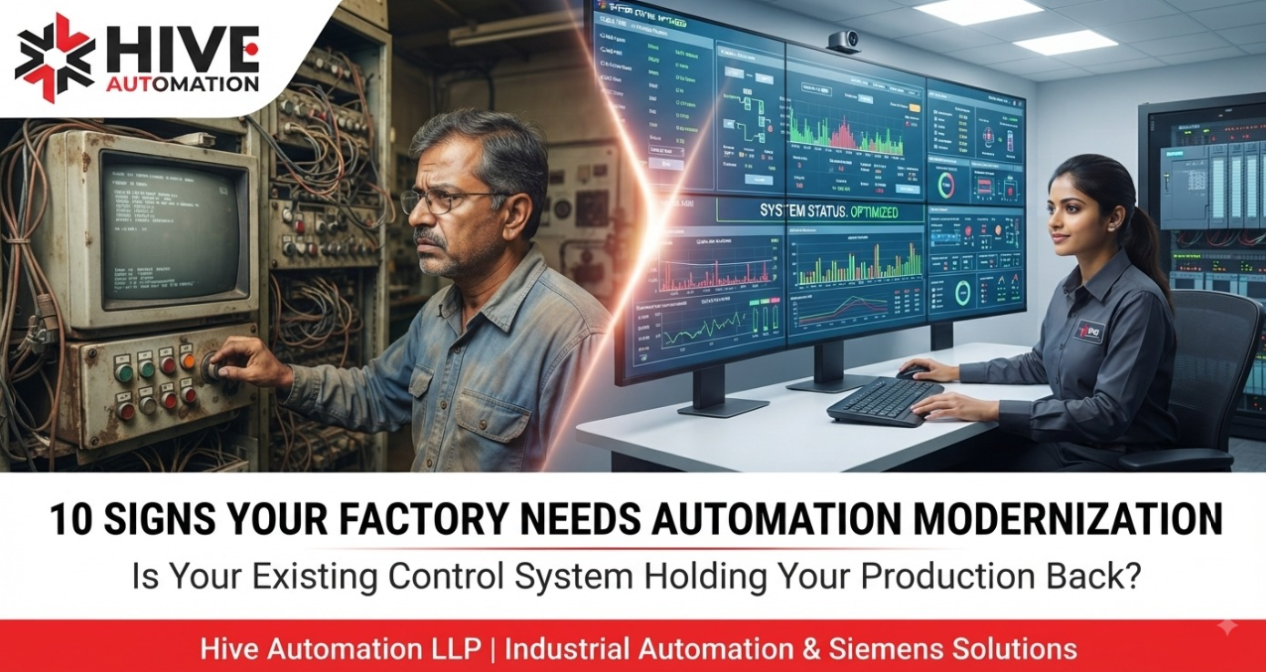
Automation can improve a factory’s productivity, quality, and safety. However, many manufacturers delay modernization because their existing equipment still works. A machine does not have to stop completely to become a business problem. It may already be creating hidden costs through slow changeovers, inconsistent quality, missing data, or difficult maintenance.
Automation modernization does not always mean replacing an entire production line. In many cases, a factory can start by upgrading controls, connecting machines, improving data collection, or automating one repetitive bottleneck. The first step is recognizing the signs that the current setup is holding the operation back.
Here are ten common signs that your factory may be ready for an automation modernization plan.
1. Unplanned downtime is becoming normal.
Every factory experiences equipment failures. The problem begins when breakdowns become part of the daily schedule rather than an occasional exception.
If operators regularly wait for maintenance, production teams keep spare parts beside the line, or supervisors cannot predict when a machine will fail, the equipment may need more than routine repair. Older controllers, obsolete drives, and unsupported software can make even simple failures harder and more expensive to resolve.
Modern automation systems can help teams monitor equipment condition, identify unusual behavior, and respond before a small issue becomes a long stoppage. Even a basic upgrade in sensors and machine monitoring can make downtime easier to understand and reduce its impact.
2. Operators still rely on paper and spreadsheets.
Paper checklists and spreadsheets may be useful for small tasks, but they create problems when they become the main source of production information. Data can be entered late, recorded incorrectly, or stored in different formats across departments.
This makes it difficult to answer simple questions. How many units were produced during the last shift? When did the line slow down? Which raw material was used for a particular batch? How often did a quality issue occur?
A modernized system can collect important production information directly from machines and make it available to the people who need it. This reduces manual entry and gives managers a clearer view of what is happening on the factory floor.
3. Product quality changes from shift to shift
If the same process produces different results depending on the operator, shift, or machine, the process may be relying too heavily on human judgment.
Experienced operators are valuable, but they should not have to compensate for inconsistent machine settings, unclear work instructions, or limited process controls. Variation can lead to rework, scrap, customer complaints, and additional inspection costs.
Automation modernization can improve consistency by controlling process parameters more precisely. It can also record those parameters, making it easier to identify the cause when quality starts to decline.
4. Skilled employees spend too much time on repetitive work.
Your most experienced employees should be solving problems, improving processes, and training others. They should not spend most of their shift entering the same information, moving materials short distances, checking simple measurements, or repeating tasks that could be handled automatically.
Repetitive work can also create fatigue and increase the risk of errors or workplace injuries. Automating selected tasks allows employees to focus on work that requires judgment, coordination, and technical expertise.
The goal is not to remove people from the process. The goal is to give them better tools and use their skills where they create the most value.
5. Changeovers take too long.
Long changeovers reduce available production time and make it harder to respond to customer demand. They can also increase the risk of setup mistakes, especially when operators must manually adjust several machines or rely on memory.
A modern automation system can store recipes, guide operators through setup steps, and transfer approved settings to connected equipment. This can reduce adjustment time and make changeovers more repeatable.
If your team loses hours every week preparing the line for a new product, changeover automation may be one of the clearest modernization opportunities.
6. Your machines cannot communicate with one another.
Many factories operate with a mixture of equipment from different generations. Some machines may have modern network connections, while others depend on local panels, older protocols, or manual readings.
When machines cannot share information, employees often become the connection between them. They read one screen, write down a value, and enter it somewhere else. This slows production and makes mistakes more likely.
Modernization can create a practical information layer between older and newer equipment. In some cases, the solution is an updated controller. In others, gateways, sensors, or industrial communication devices can connect existing machines without replacing everything at once.
7. Maintenance is mostly reactive.
Reactive maintenance means the team waits for a failure and then responds. This approach may appear less expensive in the short term, but it can lead to emergency labor, rush orders for parts, missed deliveries, and extended downtime.
Automation modernization can support preventive and condition-based maintenance. Sensors and connected systems can help track temperature, vibration, cycle counts, pressure, or other indicators that suggest a component needs attention.
The technology is most useful when it supports a clear maintenance process. Collecting data alone will not solve the problem. Teams also need defined thresholds, ownership, and procedures for acting on the information.
8. Production decisions are based on guesswork
A factory cannot improve what it cannot see. If production meetings rely on estimates, delayed reports, or conflicting numbers, leaders may make decisions without a reliable view of performance.
Modern systems can provide more timely information about production output, downtime, quality losses, and energy use. This helps teams separate symptoms from root causes. For example, a line may appear to have a labor problem when the real issue is frequent minor stops or slow material replenishment.
Better information does not replace experience. It gives experienced people stronger evidence for their decisions.
9. Safety risks are difficult to control consistently.
Safety should never be treated as an optional benefit of modernization. If workers must frequently reach into equipment, bypass controls, lift heavy materials, or work around unpredictable machine behavior, the process deserves immediate attention.
Automation can reduce exposure to hazardous tasks through guarding, interlocks, material handling equipment, and better control logic. It can also make safety-related events easier to identify and investigate.
Any safety improvement must be designed and validated by qualified personnel. Modern technology is not a substitute for a proper risk assessment, training, or compliance with applicable regulations.
10. Your current system cannot support future growth.
Even if today’s production numbers are acceptable, your automation may be limiting tomorrow’s plans. Adding a product, running a second shift, meeting tighter customer requirements, or opening another facility may expose weaknesses that were previously manageable.
Warning signs include limited system capacity, unsupported software, difficult access to spare parts, a lack of internal expertise, and systems that cannot connect with planning or quality software.
Modernization gives the factory a chance to build a more flexible foundation. It can make future expansion easier by using standardized data, modular controls, documented networks, and scalable equipment.
How to begin without disrupting the entire factory
Automation modernization does not need to happen as one large, high-risk project. A practical approach is to begin with a focused assessment.
Start by identifying the production problem with the greatest business impact. It may be unplanned downtime, excessive scrap, long changeovers, or a manual inspection step. Measure the current performance, estimate the cost of the problem, and define what improvement would justify the investment.
Next, select a pilot area that is important enough to matter but limited enough to manage. Involve operators and maintenance staff from the beginning. They understand the process details that may not appear in drawings or reports, and their experience can determine whether a new system works in practice.
Finally, plan for the full lifecycle. Consider cybersecurity, spare parts, training, documentation, system support, and future integration. A successful modernization project should make the operation easier to run several years from now, not simply make one machine look newer.
Final Thoughts
Automation modernization is no longer only for large manufacturers with unlimited budgets. Even small and mid-sized factories can improve productivity, reduce downtime, strengthen quality control, and make daily work easier by upgrading the right processes step by step.
If your factory is dealing with outdated equipment, manual reporting, repeated breakdowns, or inconsistent production results, it may be time to explore a smarter automation strategy. Hive Automation Company helps manufacturers identify practical automation opportunities and implement solutions that support long-term growth.
For factories looking to improve efficiency and remain competitive, investing in industrial automation services can be an important step toward a more reliable, connected, and future-ready operation.